
Climate change is one of the most profound challenges facing society in the 21st century. In response, we are committed to supporting the transition to a low-emission future for the benefit of both the environment and our business. By carefully and consistently integrating our climate transition plan (CTP) into our corporate strategy, we are dedicated to supporting the global effort to limit global warming to 1.5° C above pre-industrial levels.
Our material impacts, risks and opportunities related to climate change (E1 SBM-3)
Climate change mitigation |
||
|---|---|---|
Identifier |
|
E1-NI-01 |
Material impacts, risks and opportunities |
|
Actual negative impact |
Time horizon |
|
Not applicable |
Value chain step |
|
Upstream; own operations; downstream |
Description |
|
Greenhouse gas (GHG) emissions due to activities in the pharmaceutical and chemical industry: |
Climate change mitigation |
||
|---|---|---|
Identifier |
|
E1-NI-02 |
Material impacts, risks and opportunities |
|
Actual negative impact |
Time horizon |
|
Not applicable |
Value chain step |
|
Upstream; downstream |
Description |
|
GHG emissions from transport services: |
Energy |
||
|---|---|---|
Identifier |
|
E1-NI-03 |
Material impacts, risks and opportunities |
|
Actual negative impact |
Time horizon |
|
Not applicable |
Value chain step |
|
Upstream; own operations; downstream |
Description |
|
Fossil fuels for energy consumption in industrial manufacturing: |
Climate change adaptation |
||
|---|---|---|
Identifier |
|
E1-R-01 |
Material impacts, risks and opportunities |
|
Risk |
Time horizon |
|
Long-term |
Value chain step |
|
Upstream; own operations; downstream |
Description |
|
Physical risks: |
Climate change mitigation |
||
|---|---|---|
Identifier |
|
E1-R-02 |
Material impacts, risks and opportunities |
|
Risk |
Time horizon |
|
Long-term |
Value chain step |
|
Upstream; own operations; downstream |
Description |
|
Transition risks: |
Climate change mitigation, Climate change adaptation |
||
|---|---|---|
Identifier |
|
E1-O-01 |
Material impacts, risks and opportunities |
|
Opportunity |
Time horizon |
|
Long-term |
Value chain step |
|
Upstream; own operations; downstream |
Description |
|
Revenue growth driven by our commitment to sustainability and climate action: |
Climate resilience analysis
Climate resilience analysis is a vital tool for identifying and evaluating the risks and opportunities that climate change presents to our business. In 2022, we conducted a qualitative assessment of climate risks and vulnerabilities across our upstream, own operation and downstream activities. Building on this foundation, we aligned our efforts with the recommendations of the Task Force on Climate-related Financial Disclosures (TCFD) by undertaking quantitative climate scenario analyses, specifically focusing on upstream activities and our own operations, excluding downstream activities. This assessment identified climate-related risks and opportunities across three potential climate pathways: a 1.5° C Paris Agreement-aligned scenario, a 2.7° C middle-of-the-road scenario, and a 4.0° C fossil-fueled development scenario, using a 2050 time horizon. All three scenarios are based on those created by the Intergovernmental Panel on Climate Change (IPCC). Our analysis, guided by the TCFD framework, encompasses both transition and physical risks and opportunities related to our business activities.
Applied scenario |
|
1.5°C (net zero development) |
|
2.7°C (middle-of-the-road) |
|
4°C (fossil-fueled development) |
|---|---|---|---|---|---|---|
Scenario details |
|
Orderly transition |
|
Disorderly transition |
|
No transition |
IPCC reference |
|
SSP1 – RCP1.9 |
|
SSP2 – RCP4.5 |
|
SSP5 – RCP8.5 |
Expected transition impacts |
|
High |
|
Moderate (geography/sector dependent) |
|
Low |
Expected physical impacts |
|
Low |
|
High |
|
Extreme |
Decarbonization trends |
|
Rapid progress consistent with net zero by 2050 |
|
Gradual improvement; fossil fuels remain material |
|
Limited progress; fossil fuels remain dominant |
Policy expectations |
|
High policy effectiveness and market incentives |
|
Mixed policy effectiveness |
|
Limited policy intervention |
Primary use in our analysis |
|
Transition risks and strategy alignment |
|
Transition and physical risks sensitivity |
|
Physical risks stress test |
The narratives used in our climate scenario analysis encompass a range of plausible futures, including scenarios that reflect varying degrees of climate action and economic transition. We focus on the time horizons of 2030, 2040 and 2050. The endpoints of these scenarios provide a framework for assessing potential risks and opportunities under different climate conditions, including both optimistic and pessimistic outcomes. By incorporating a variety of narratives that reflect different levels of climate action and technological advancement, we can better understand the potential impacts on our business.
Results of the climate resilience analysis
The climate resilience analysis indicates that we are adequately prepared to adjust and adapt our strategy and business model to climate change, with plans to further explore details related to asset management, product and service shifts, to demonstrate resilience through securing ongoing access to finance in the future.
Across a 2050 time horizon, we found that the impact of physical risk on our sites is limited under a 4°C scenario. Our assessments highlight the necessity of resilient infrastructure and adequate insurance coverage to mitigate these risks.
The analysis of transition risks has provided valuable insights that will inform our ongoing strategic planning and adaptation efforts. Our strategy aims to manage transition risks through investments in renewable energy, enhancements in energy efficiency and supplier decarbonization programs. We also incorporate GHG emissions criteria into our investment decisions and apply a shadow price for carbon to guide our strategic choices. In addition to managing risks, we plan to capitalize on climate-related opportunities by aligning our market strategies with sustainability trends, thereby strengthening our competitive position and fostering growth.
Moving forward, we will work on linking the resilience analysis with our climate transition plan to further integrate climate-related issues into our decision-making and strategy. Additionally, we embed sustainability into our product development and market strategies. By prioritizing innovation and sustainable practices, we aim to enhance our resilience against climate-related risks while capturing opportunities from the transition to a low-carbon economy. Our commitment to sustainability aligns with global climate initiatives and drives long-term growth and competitiveness.
While our climate resilience analysis forms a foundational framework for managing climate-related risks and opportunities, we are aware of the uncertainties in predicting future climate conditions and regulatory landscapes. We are actively working to enhance our adaptability to these uncertainties, focusing on supply chain sustainability, energy efficiency and carbon footprint reduction as part of our inaugural transition plan. We have aligned the time horizons of our climate risk analysis with the expected lifetimes of our assets, ensuring that all material assets are considered throughout their entire lifespan. Additionally, we are starting to incorporate this alignment into our capital allocation strategies, and we remain committed to further integrating these considerations into our long-term planning and decision-making processes.
Finally, we are also developing a comprehensive risk management strategy to strengthen our capacity to adapt to climate-related risks and opportunities. More details on the actions and resources we have allocated to climate initiatives can be found in section E1-3.
Our transition plan for climate change mitigation (E1-1)
In fiscal 2025, the Executive Board approved core elements of our Climate Transition Plan (CTP), including the high-level decarbonization roadmap and key decarbonizaton levers. In the near term, our science-based targets according to Science Based Targets Initiative (SBTi) aim to reduce Scope 1 and Scope 2 GHG emissions by 50% and to reduce Scope 3 emissions intensity by 52% in relation to our gross profit, both by 2030 versus 2020. We also aim to source 80% of purchased electricity from renewable and low-carbon sources by 2030. We furthermore intend to reach climate neutrality by 2040. Our strategy focuses on abating process emissions, improving energy efficiency and expanding renewable and low-carbon power across our sites. Details on these targets can be found in section E1-4.
To reach climate neutrality in own operations by 2040, we take practical steps: drive energy efficiency, scale renewable and low-carbon electricity (including onsite where feasible), phase down fossil fuels, and advance circularity and product design to cut process emissions.
To reach climate neutrality in our upstream and downstream value chain, we actively engage with our key suppliers, requesting them to disclose emissions and set climate targets. Additionally, we work with customers to reduce emissions from product use, thus increasing climate-neutral sourcing, aligning investments with these priorities and tracking progress through clear milestones and metrics. Details on our actions can be found in section E1-3.
Our roadmap to climate neutrality
The following graphic visualizes our climate transition plan, illustrating the systematic development of climate mitigation measures from 2020 to achieving climate neutrality, structured around SBTi commitments.
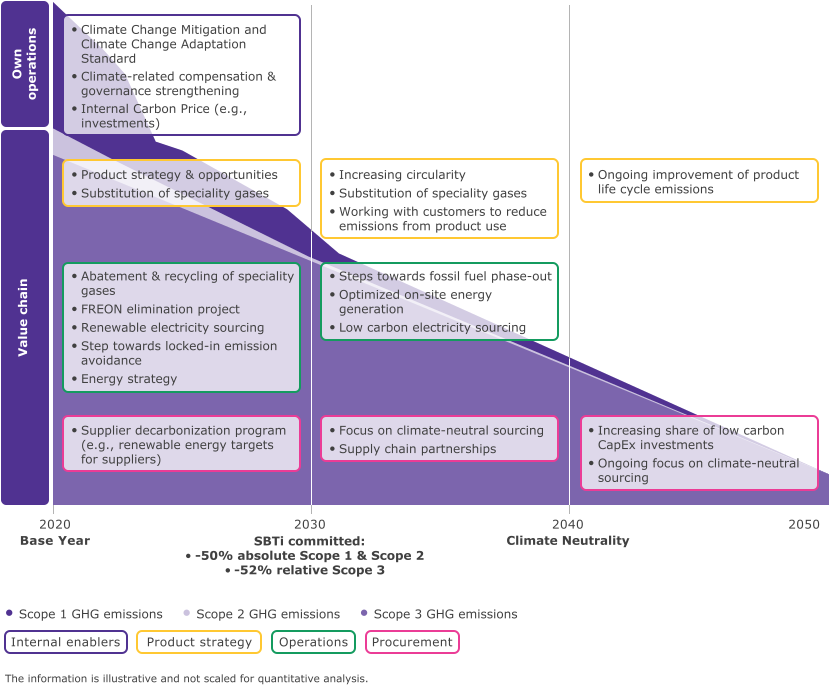
The Executive Board oversees the CTP. We are in the process of integrating it in our business sector strategies, which will also be approved by the Executive Board to ensure alignment with our sustainability targets.
Our company does not currently create an investment plan in the sense of the EU Taxonomy for transforming taxonomy-eligible into taxonomy-aligned economic activities. For this reason, aligning the transition plan with such a plan is not possible. We intend to conduct regular reviews to monitor our progress and adjust strategies to ensure we achieve our sustainability goals.
To reach our targets, we defined decarbonization levers and respective actions. The actions can be attributed to operations, procurement, product strategy, or can be regarded as internal enablers. Our decarbonization levers are modeled as internal scenarios within our transition pathways and climate risk and opportunity assessment framework. They are applied against external climate reference scenarios (for example, the IPCC and International Energy Agency (IEA) pathways) to quantify the timing, costs and emission reduction effects of specific measures across the short‑term (2030), medium‑term (2040) and long‑term (2050) time horizons. Sector‑level inputs and sensitivity testing illustrate how different decarbonization lever deployments affect financial and risk outcomes. The corresponding actions and timelines are detailed in E1-3.
We are strengthening processes to manage potential locked-in emissions. Products with potential locked-in emissions have not yet been identified. Our assessment highlights that two facilities covered by the European Emissions Trading System (EU ETS) in Germany are locally material due to their regulatory exposure and asset lifetimes: a gas turbine in Darmstadt and a gas engine in Gernsheim. Both sites have been covered by the EU ETS since 2005. In 2025, we enhanced our monitoring of EU ETS compliance and carbon price exposure. We are reviewing targeted abatement options and energy efficiency programs and have progressed ISO 50001 energy management at both sites.
None of our activities are covered by the list of activities deemed incompatible with achieving the Paris Agreement (Article 12 of Commission Delegated Regulation (EU) 2020/1818, Climate Benchmark Standards Regulation).
Our policies in connection with climate change (E1-2)
EHS-Policy |
||
|---|---|---|
Connection to material impacts, risks and/or opportunities |
|
Identifier E1-NI-01; E1-NI-03 |
Material sustainability matter |
|
Climate change mitigation; energy |
Key contents |
|
The policy clarifies our responsibility for Environment, Health and Safety (EHS) and commits to operating in a manner that reduces or eliminates risks to the environment, human health and safety while enabling sustainable business performance. Core elements include leadership accountability for a strong safety culture, robust compliance processes, integration of EHS into strategic business decisions, targeted EHS training and engagement, and product stewardship across the life cycle. The policy drives continual improvement via goals, programs and indicators to monitor and reduce injuries/accidents, energy and resource consumption, and waste, alongside emergency preparedness for environmental and safety protection and business continuity. The policy is continually monitored and part of our EHS management system. |
Scope of application |
|
The policy applies Group-wide to our own operations and to the upstream and downstream value chain. |
Accountability |
|
Chair of the Executive Board and CEO. |
Third-party standards/ |
|
The policy is based on the principles of the UN Global Compact and the Responsible Care® Global Charter. It considers requirements of our global integrated management system, notably ISO 14001 Environmental Management System, ISO 45001 Occupational Health and Safety Management System, and ISO 50001 Energy Management System. |
Consideration of stakeholder interests |
|
When setting the policy, we considered the interests of our employees and customers. |
Availability |
|
The policy is available internally on the intranet and publicly on our website. |
Air Emissions Standard |
||
|---|---|---|
Connection to material impacts, risks and/or opportunities |
|
Identifier E1-NI-01 |
Material sustainability matter |
|
Climate change mitigation |
Key contents |
|
The policy sets our global guidelines for minimizing potential negative impacts associated with air emissions at our sites worldwide. It sets protocols for monitoring and reducing air emissions, with a focus on adopting cleaner technologies to lower GHG emissions. The policy is regularly monitored and updated. |
Scope of application |
|
The policy applies Group-wide at all sites. |
Accountability |
|
Managing Director or Site Manager/Director, or qualified, responsible employees (for example, EHS staff, facility management staff). |
Third-party standards/initiatives |
|
The policy is based on ISO 14001. |
Consideration of stakeholder interests |
|
When setting the policy, we considered the interests of internal stakeholders. |
Availability |
|
The policy is available on the intranet. |
Emissions of Refrigerants Standard |
||
|---|---|---|
Connection to material impacts, risks and/or opportunities |
|
Identifier E1-NI-01 |
Material sustainability matter |
|
Climate change mitigation |
Key contents |
|
The policy sets binding requirements for avoiding refrigerant emissions across all areas of our company. It regulates the use of refrigerants, emphasizing the importance of leak detection and transitioning to low-global warming potential (GWP) alternatives to minimize emissions. This standard is implemented through specific global or local procedures by business sectors and their supporting functions. The policy is regularly monitored and updated. |
Scope of application |
|
The policy applies Group-wide at all sites. |
Accountability |
|
Managing Director or Site Manager/Director, or qualified, responsible employees (for example, EHS staff, facility management staff). |
Third-party standards/initiatives |
|
The policy considers the Montreal Protocol and technical hazard standards (for example, ASHRAE Std. 34) as well as ISO 14001 requirements. |
Consideration of stakeholder interests |
|
When setting the policy, we considered the interests of internal stakeholders. |
Availability |
|
The policy is available on the intranet. |
Energy Management Standard |
||
|---|---|---|
Connection to material impacts, risks and/or opportunities |
|
Identifier E1-NI-01; E1-NI-03 |
Material sustainability matter |
|
Climate change mitigation; energy |
Key contents |
|
The policy sets binding requirements for energy management across all areas of our company. It is dedicated to improving energy efficiency and managing energy consumption to reduce overall carbon emissions. It includes specific internal guidelines with best practices for energy efficiency, such as conducting regular energy audits to identify inefficiencies and implementing corrective measures. This standard is implemented through specific global or local procedures by business sectors and supportive functions. The policy is regularly monitored and updated. |
Scope of application |
|
The policy applies Group-wide at all sites. |
Accountability |
|
Managing Director or Site Manager/Director, or qualified, responsible employees (for example, EHS staff, facility/energy management staff). |
Third-party standards/initiatives |
|
The policy is based on ISO 50001. |
Consideration of stakeholder interests |
|
When setting the policy, we considered the interests of internal stakeholders. |
Availability |
|
The policy is available on the intranet. |
Supplier Code of Conduct |
||
|---|---|---|
Connection to material impacts, risks and/or opportunities |
|
Identifier E1-NI-01; E1-NI-02; E1-NI-03 |
Material sustainability matter |
|
Climate change mitigation; energy |
Key contents |
|
The policy explains to our suppliers and sales intermediaries what our expectations are regarding human and labor rights, occupational health and safety, business integrity, environmental protection, security, cybersecurity, protection of assets, animal welfare as well as continuous improvement and supplier management. A standardized process ensures that our suppliers formally acknowledge the Supplier Code of Conduct. Group Procurement is responsible for integrating sustainability requirements into the relevant phases of their supplier management processes. Our General Terms and Conditions of Purchase refer to the policy since 2023. We updated the policy effective September 2025. Examples include new guidance on digital ethics and artificial intelligence, expanded animal welfare requirements a new climate change section, new expectations for PFAS reduction, separate waste and wastewater chapters, a new deforestation chapter (which replaces the former palm oil section), enhanced biodiversity requirements, and strengthened expectations for cybersecurity and data protection.The policy is regularly monitored and updated. |
Scope of application |
|
The policy applies globally to all our providers of goods and/or services (“Suppliers”) and to sales intermediares (e.g., dealers, distributors, wholesalers, and resellers). |
Accountability |
|
Chief Procurement Officer and Group General Counsel |
Third-party standards/initiatives |
|
The policy considers a number of third-party standards and initiatives. These include, for example, the UN Global Compact (UNGC), the UN Guiding Principles on Business and Human Rights (UNGPs), the ILO Declaration on Fundamental Principles and Rights at Work and its Follow-up, the OECD Due Diligence Guidance on Responsible Business Conduct, the EU Deforestation Regulation (EU) 2023/1115, the Conflict Minerals Regulation (EU) 2017/821, the Dodd-Frank Wall Street Reform and Consumer Protection Act, Sec. 1502, the OECD Due Diligence Guidance for Responsible Supply Chains of Minerals from Conflict-Affected and High-Risk Areas, the Greenhouse Gas (GHG) Protocol, ISO 50001 (Energy Management), the Minamata Convention, the Stockholm Convention on Persistent Organic Pollutants, the Basel Convention on the Control of Transboundary Movements of Hazardous Wastes and Their Disposal, the European Convention ETS 123 Appendix A, the latest edition of the U.S. ILAR Guide, and circular economy resources such as those from the Ellen MacArthur Foundation. |
Consideration of stakeholder interests |
|
When setting the policy, we considered the perspectives of internal and external stakeholders as well as experts. |
Availability |
|
The policy is available internally on the intranet and publicly on our website. The policy is referred to in our orders via a link to the General Terms and Conditions; it is also embedded in new or amended contracts. |
Our policies address various key elements of climate change. Climate change mitigation is embedded in our Group EHS Policy and operational standards on air emissions and refrigerants. Energy efficiency is promoted through our Energy Management Standard, which aligns with ISO 50001. The deployment of renewable energy is encouraged by our Supplier Code of Conduct, which aims to increase renewable electricity sourcing. We currently develop a new Climate Change Mitigation and Climate Change Adaptation Standard which will be introduced in 2026. It will address all of the above-mentioned areas as well as climate change adaptation. It outlines our approach to climate-resilient operations and risk management. Our policies also cover various other climate-related matters, including carbon pricing, supplier decarbonization, emissions management across the value chain, and the adoption of cleaner technologies within the scope of our Air Emissions Standard.
Our actions and resources in relation to climate change (E1-3)
As described in E1-1, our Climate Transition Plan sets the overarching target and framework for our ambition to support the transition to a low-emission future. The transition plan encompasses a range of strategic initiatives within various decarbonization levers, aiming to significantly reduce our GHG emissions and enhance sustainability. Therefore, according to our climate transition plan, our actions primarily focus on climate change mitigation rather than adaptation.
We disclose our climate actions at the level of decarbonization levers. For each lever, we detail the key actions planned and implemented, along with the expected and achieved GHG emission reductions in tons of CO2 equivalent (CO2eq).
Decarbonization levers – emission reduction framework
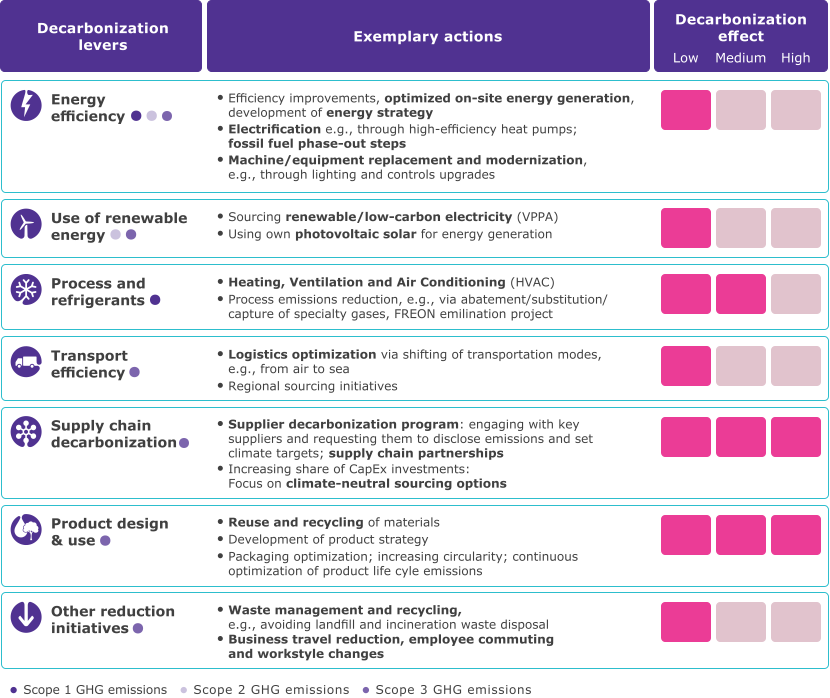
The following overview illustrates our comprehensive decarbonization approach along the central levers, differentiated by their respective reduction potential for Scope 1, 2, and 3 GHG emissions.
Energy efficiency
Our energy efficiency measures aim to reduce our energy demand through process improvements. These actions primarily contribute to achieving our Scope 1 and 2 targets. The achieved and expected reductions refer to market-based Scope 2 emissions. In our Life Science business sector, we continue executing actions via our EDISON program, which enhances operational energy efficiency by optimizing energy use within our facilities. EDISON projects completed in 2025 are estimated to reduce 6,080 tons of CO2eq annually. The EDISON Program is scheduled to fund energy efficiency projects through 2030. In our Healthcare business sector, we continued our effort on energy efficiency in 2025, by rolling out a comprehensive Energy Management System to our sites. Additionally, we implemented several projects on compressed air, thermal energy loss reductions, such as steam traps and insulation, as well as upgrades on reverse osmosis skids. On top of that, we have launched decarbonization studies on new technologies for four sites, focusing on high-temperature heat pumps.
We achieved a total reduction through our energy efficiency measures across all business sectors in fiscal 2025 that aligns with the expected long-term low decarbonization effect.
Use of renewable energy
Transitioning to renewable energy is a core lever for decarbonizing electricity consumption, and the actions within this decarbonization lever directly contribute to our Scope 2 target, for instance through technical upgrades. In Life Science, we sourced new renewable electricity contracts in 2025, adding 16 MW capacity of renewable electricity in South Korea. In our Electronics business sector, we increased our renewable electricity coverage in 2025 significantly, benefitting from a full year’s contribution of a contract that went live at the end of 2024. Our commitment to these actions remains a continuous effort to drive sustainability forward. In Healthcare, we continue investing in on site solar photovoltaic capacity. In 2025, we completed and fully commissioned solar electricity installations at our sites in Bari, Italy, and in Nantong, China. For 2026, we estimate a reduction of 3,000 tons of CO2eq through various energy efficiency and green energy measures.
We achieved a total reduction through our use of renewable energy across all our business sectors in fiscal 2025 that aligns with the expected long-term low decarbonization effect.
Process and refrigerants
Reducing process emissions and refrigerant-related GHG emissions is critical, due to their high global warming potential (GWP). Our actions to reduce these emissions directly contribute to our Scope 1 target. In Life Science, our process gas reduction initiative reduces our reliance on high-GWP-fluorinated carbons by eliminating Freon in manufacturing processes. This has helped us achieve a reduction of 77,677 tons of CO2eq since 2020. The project is scheduled to complete in 2030. In Electronics, we reduced NF3 emissions in 2025 due to the ongoing contribution from our abatement systems in Hometown (USA) and significantly increased contribution from Ulsan (South Korea), where those abatement systems went operational at the end of 2024. Together, these resulted in a reduction of 193,820 tons of CO2eq in fiscal 2025 compared to the previous year.
We achieved a total reduction through our measures on process and refrigerants across all business sectors in fiscal 2025 that aligns with the expected long-term medium decarbonization effect.
Transport efficiency
We aim to reduce logistics emissions by optimizing routes and shifting to lower-carbon modes of transport. These measures are essential for addressing Scope 3 emissions associated with our inbound, inter-company and outbound transportation and, therefore, contribute to our Scope 3 target. With our Mode Shift program in Life Science, we aim to reduce logistics emissions by using sea freight instead of air freight. The program was completed in 2025. By then we were able to reduce our respective Scope 3.4 emissions from upstream transportation and distribution by 15,901 tons of CO2eq compared to 2020. The Life Science business continues to use sea freight wherever possible.
We achieved a total reduction through transport efficiency across all business sectors in fiscal 2025 that aligns with the expected long-term low decarbonization effect.
Supply chain decarbonization
Supply chain decarbonization is essential to reducing our Scope 3 emissions. Our supplier decarbonization program focuses on assessing and enhancing supplier compliance with the SBTi, increasing the share of renewable electricity used by suppliers and educating suppliers on emission reduction levers to drive actionable change. The program tracks the maturity levels of our suppliers and facilitates the exchange on primary data. We continuously observe a consistent increase in the share of renewable electricity among suppliers in our decarbonization program, along with a growing number of suppliers capable of sharing emissions data derived from established GHG inventories that encompass both their own operations (Scope 1 and 2) and the entire value chain (Scope 3). We anticipate that this initiative will lead to significant long-term benefits, incentivizing suppliers to actively reduce their emissions.
We achieved a total reduction through our supply chain decarbonization across all business sectors in fiscal 2025 that aligns with the expected long-term high decarbonization effect.
Product design and use
Reductions in our value chain emissions that contribute to our Scope 3 target are achieved through improved product design. In Life Science, we drive this through sustainable research and development as well as material sourcing. For example, our Cork, Ireland, manufacturing site producing material for our Amicon® centrifugal ultrafiltration devices obtained International Sustainability & Carbon Certification (ISCC) PLUS certification in 2025, confirming that the polymers used in these products are obtained through renewable feedstock, rather than petroleum. Through this change in material, we expect to reduce 757 tons of CO2eq annually.
We achieved a total reduction through product design and use across all business sectors in fiscal 2025 that aligns with the expected long-term high decarbonization effect.
Financial resources for climate change mitigation
In 2025, we allocated € 31 million of capital expenditure (CapEx) to the previously mentioned actions in relation to climate change mitigation, which are included in the respective lines of the balance sheet.
Our ability to implement these actions depends significantly on the availability and allocation of financial resources. Ongoing access to finance at an affordable cost of capital is critical for the execution of our strategies. This includes related acquisitions, and significant investments in research and development. Ensuring resource availability is a priority to maintain progress toward our climate objectives. We are currently exploring state-of-the-art technologies available in the market, as they will be essential for enhancing our operational efficiency and implementing innovative solutions that align with our climate change mitigation targets.
Climate change adaptation initiatives
Alongside our climate change mitigation actions detailed above, we advance site-level climate change adaptation to enhance the ability of our sites to withstand physical risks, such as flooding, high winds and drought. For this, we are assessing the resilience of our sites and are implementing practical measures. For flooding, these include elevating critical equipment and improving the waterproofing of building envelopes to reduce potential flood impacts. To manage wind exposure, we secure and anchor rooftop equipment and install storm shutters. To address drought conditions, we enhance water efficiency with low-flow fixtures, leak detection and water recycling solutions. Collectively, these actions support resilience to climate change and help safeguard people, assets, and operational continuity.
Our targets in connection with climate change (E1-4)
Scope 1 Absolute Emissions Target |
||
|---|---|---|
Reference to material impacts, risks and/or opportunities |
|
Identifier E1-NI-01 |
Material sustainability matter |
|
Climate change mitigation |
Target |
|
We want to reduce our direct GHG emissions (Scope 1) by 50% by 2030 in our own operations. |
Reference value/year |
|
1,827,123 tons (2020) |
Methods |
|
This climate target is science-based according to SBTi, the absolute contraction approach and the science-based target setting tool provided by SBTi. In April 2022, the initiative validated and approved our target for 2030. |
Consideration of stakeholders |
|
Our Sustainability Committee and business sectors are involved in setting targets, with final approval granted by the Executive Board. |
Changes from the previous year |
|
No changes were made. |
Performance/Key figures |
|
We monitor our Scope 1 emissions on a quarterly basis using monthly data collected via our Group-wide EHS data management system. In 2025, we reduced our Scope 1 emissions by 199,712 tons of CO2eq (2024: 378,315), bringing them down to 657,835 tons CO2eq (2024: 858,053). We reduced our Scope 1 emissions by 64% (2024: 53%) compared to the base year 2020, achieving our target early. We are working on stabilizing the results. The 1.5°C aligned reference target value for Scope 1 GHG emissions is 913,561 tons of CO2eq. Please see E1-6 for more details on our performance. |
Scope 2 Absolute Emissions Target |
||
|---|---|---|
Reference to material impacts, risks and/or opportunities |
|
Identifier E1-NI-01 |
Material sustainability matter |
|
Climate change mitigation |
Target |
|
We want to reduce our indirect GHG emissions (Scope 2 – market based) by 50% by 2030. The target covers purchased electricity, steam, heating, and cooling for own use across our own operations. |
Reference value/year |
|
324,698 tons (2020) |
Methods |
|
This climate target is science-based according to SBTi, the absolute contraction approach and the science-based target setting tool provided by SBTi. In April 2022, the initiative validated and approved our target for 2030. |
Consideration of stakeholders |
|
Our Sustainability Board and business sectors are involved in setting targets, with final approval granted by the Executive Board. |
Changes from the previous year |
|
No changes were made. |
Performance/Key figures |
|
We monitor our Scope 2 emissions on a quarterly basis using monthly data collected via our Group-wide EHS data management system. In 2025, we reduced our marked-based Scope 2 emissions by 29,998 tons of CO2eq (2024: 138), bringing them down to 197,072 tons CO2eq (2024: 227,070), which is equivalent to a reduction of 39% compared to the base year 2020 (2024: 30%). The 1.5° C aligned reference target value for Scope 2 GHG emissions is 162,349 tons CO2eq. For more details on our performance, please refer to E1-6. |
Scope 3 Intensity Emissions Target |
||
|---|---|---|
Reference to material impacts, risks and/or opportunities |
|
Identifier E1-NI-01; E1-NI-02; E1-NI-03 |
Material sustainability matter |
|
Climate change mitigation; energy |
Target |
|
By 2030, we want to reduce our emissions along the entire value chain (Scope 3) by 52% in relation to our gross profit (to 230 metric tons CO2eq per € million gross profit). We plan to achieve a significant reduction of absolute Scope 3 emissions by 2030 compared with the base year 2020. |
Reference value/year |
|
480 metric tons CO2eq per € million gross profit (2020) |
Methods |
|
The economic intensity target was set up based on SBTi criteria and the science-based target setting tool provided by SBTi. In April 2022, the SBTi validated and approved this target for 2030. |
Consideration of stakeholders |
|
Our Sustainability Committee and business sectors are involved in setting targets, with final approval granted by the Executive Board. |
Changes from the previous year |
|
No changes were made. |
Performance/Key figures |
|
We monitor our Scope 3 emissions annually. In 2025, we have achieved 316 metric tons CO2eq per € million gross profit (2024: 359). The target setup is based on the SBTi criteria, which offers three approaches: Absolute Contraction Approach, Economic Intensity Approach, and Physical Intensity Approach. |
Renewable Energy Target |
||
|---|---|---|
Reference to material impacts, risks and/or opportunities |
|
Identifier E1-NI-03 |
Material sustainability matter |
|
Climate change mitigation; energy |
Target |
|
We want to cover 80% of our purchased electricity across our own operations with renewable energies by 2030. By increasing the share of renewable electricity, we support our target to reduce Scope 2 emissions. We assume that there will be enough renewable energy at an acceptable price point by 2030. |
Reference value/year |
|
No actual reference year as the target looks at overall coverage of the procured energy. |
Methods |
|
The methodology for achieving this target considers the varying ease of purchasing reliable “green” electricity products across different countries. In some regions, it is relatively straightforward to acquire such products, while in others, it presents significant challenges due to limited availability or capacity constraints. The 80% target reflects these considerations. This is not an SBTi-approved target. |
Consideration of stakeholders |
|
Our Sustainability Committee and business sectors are involved in setting targets, with final approval granted by the Executive Board. |
Changes from the previous year |
|
No changes were made. |
Performance/Key figures |
|
In 2025, we achieved 63.9% coverage of purchased electricity with renewable energies (2024: 52.2%). |
Climate Neutrality Target |
||
|---|---|---|
Reference to material impacts, risks and/or opportunities |
|
Identifier E1-NI-01; E1-NI-02; E1-NI-03 |
Material sustainability matter |
|
Climate change mitigation; energy |
Target |
|
By 2040, we want to achieve climate neutrality along the entire value chain. |
Reference value/year |
|
No actual reference year as the target looks at overall coverage of the procured energy. |
Methods |
|
After reaching our mid-term 2030 science-based targets according to SBTi, we will continue to pursue our comprehensive approach to further reduce our GHG emissions along the entire value chain, based on our current transition plan at that time. We assume that our suppliers and clients will keep working on their own targets and fulfill them. We are aligning our methodologies with (inter)national policy goals such as the EU Green Deal. This is not an SBTi-approved target. |
Consideration of stakeholders |
|
Our Sustainability Committee and business sectors are involved in setting targets, with final approval granted by the Executive Board. |
Changes from the previous year |
|
No changes were made. |
Performance/Key figures |
|
We monitor this target annually. Please see E1-6 for more details on our performance. |
The targets outlined above focus on the sustainability topics of climate change mitigation and energy efficiency. While we have not yet incorporated climate change adaptation into our targets, we are making progress through our resilience and climate scenario analysis by developing our new Climate Change Mitigation and Climate Change Adaptation Standard, which will be introduced in 2026.
Our GHG reeduction targets are aligned with our comprehensive GHG inventory boundaries, ensuring consistency and transparency in reporting, and are developed following recognized standards, such as the SBTi. Apart from our SBTi-validated target, the following metrics have not been separately validated by an external body.
Energy consumption and mix (E1-5)
Understanding our energy consumption and the energy sources that comprise our energy mix is crucial for reducing our environmental impact.
Energy consumption and mix
The following table outlines our total energy consumption in MWh disaggregated by source and the share of renewable and non-renewable energy sources:
in MWh1 |
|
2025 |
|
2024 |
|
Change to previous year |
|
2025 |
|
2024 |
||||
|---|---|---|---|---|---|---|---|---|---|---|---|---|---|---|
(1) Fuel consumption from coal and coal products |
|
|
|
|
|
|
|
|
|
|
||||
(2) Fuel consumption from crude oil and petroleum products |
|
42,526 |
|
46,448 |
|
-8.4% |
|
7,754 |
|
7,866 |
||||
(3) Fuel consumption from natural gas |
|
1,132,999 |
|
1,148,361 |
|
-1.3% |
|
88,154 |
|
59,260 |
||||
(4) Fuel consumption from other fossil sources |
|
|
|
|
|
|
|
|
|
|
||||
(5) Consumption of purchased or acquired electricity, heat, steam, and cooling from fossil sources |
|
456,159 |
|
528,790 |
|
-13.7% |
|
11,704 |
|
9,152 |
||||
(6) Total fossil energy consumption |
|
1,631,684 |
|
1,723,598 |
|
-5.3% |
|
107,613 |
|
76,278 |
||||
Share of fossil sources in the total energy consumption (%) |
|
67.1 |
|
72.0 |
|
|
|
97.9 |
|
100 |
||||
(7) Consumption from nuclear sources |
|
83,117 |
|
98,936 |
|
-16.0% |
|
– |
|
161 |
||||
Share of consumption from nuclear sources in total energy consumption (%) |
|
3.4 |
|
4.1 |
|
|
|
– |
|
– |
||||
(8) Fuel consumption for renewable sources, including biomass (also comprising industrial and municipal waste of biologic origin, biogas, renewable hydrogen, etc.) |
|
37,104 |
|
31,242 |
|
18.8% |
|
– |
|
– |
||||
(9) Consumption of purchased or acquired electricity, heat, steam, and cooling from renewable sources |
|
653,846 |
|
524,673 |
|
24.6% |
|
– |
|
– |
||||
(10) Consumption of self-generated non-fuel renewable energy |
|
25,001 |
|
16,271 |
|
53.7% |
|
2,299 |
|
– |
||||
(11) Total renewable energy consumption |
|
715,950 |
|
572,186 |
|
25.1% |
|
2,299 |
|
– |
||||
Share of renewable sources in total energy consumption (%) |
|
29.5 |
|
23.9 |
|
|
|
2.1 |
|
– |
||||
Total energy consumption |
|
2,430,751 |
|
2,394,720 |
|
1.5% |
|
109,912 |
|
76,436 |
||||
|
||||||||||||||
Our sites collect their energy consumption data through our Group-wide EHS data management system. Fuel consumption data (1-4) are derived directly from reported figures. The consumption of purchased or acquired electricity, heat, steam, and cooling from fossil sources (5) includes energy sourced from third parties, tracked through contracts and invoices. The total consumption of fossil energy (6) is calculated as the sum of fossil fuel consumption (1-5). The calculation of consumption from nuclear sources is based on estimates, utilizing data from the scientific online publication “Our World in Data”. The fuel consumption for renewable sources, including biomass (8), includes energy from renewable materials. This data is collected on site and included in our Group-wide EHS data management system. The consumption of purchased or acquired electricity, heat, steam, and cooling from renewable sources (9) includes renewable energy sourced from third parties, tracked through contracts and invoices. The consumption of self-generated renewable energy, excluding fuels, (10) refers to renewable energy generated on site, such as solar energy, determined through production metrics. The total energy consumption metric represents the combined energy used across all activities.
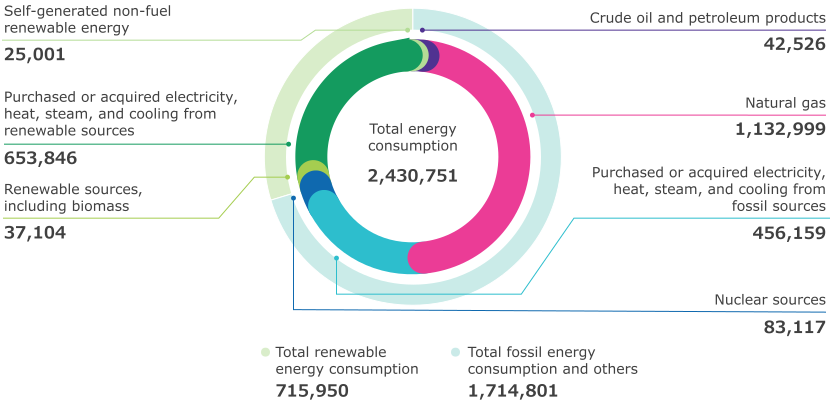
The following energy overview presents our total energy consumption, demonstrating our current renewable energy share compared to fossil sources.
Energy production
The energy generation associated with our activities is summarized in the table below:
in MWh |
|
2025 |
|
2024 |
|
2025 |
|
2024 |
|---|---|---|---|---|---|---|---|---|
Renewable energy production |
|
56,953 |
|
43,110 |
|
8,226 |
|
5,842 |
Non-renewable energy production |
|
1,042,611 |
|
1,066,229 |
|
455,897 |
|
473,124 |
The renewable energy generation metric includes energy generated from renewable sources such as solar, wind and biomass. We collect the data from energy reports and production metrics from our sites. The metric of non-renewable energy generation is based on actual generation data from the Darmstadt and Gernsheim sites (Germany), an estimate for other sites based on reported energy consumption, and an average energy generation efficiency value. Part of the generated energy is sold externally.
Energy intensity per net sales
The energy intensity per net sales associated with our activities is summarized in the table below:
in MWh/€ million |
|
2025 |
|
2024 |
|
Change to previous year |
|---|---|---|---|---|---|---|
Total energy consumption from activities in high climate impact sectors per net sales |
|
115 |
|
113 |
|
1.8% |
The data on net sales were taken from our Consolidated Income Statement, which totaled € 21,102 million in the fiscal 2025 (2024: 21,156). Energy intensity is determined by dividing the total energy consumption (in MWh) by net sales (in million euros) generated from our activities in high-climate-impact sectors. As per the ESRS definition, all our business activities fall into the manufacturing category and are therefore considered to have a high climate impact.
Our GHG emissions in the categories of Scope 1, 2 and 3 (E1-6)
Understanding our GHG emissions is crucial for assessing our environmental impact and enhancing our sustainability initiatives, particularly in support of our target to reduce emissions. This section provides an overview of our gross GHG emissions across all three scopes, as well as our total GHG emissions.
Gross scope 1, 2 and 3 GHG emissions and total GHG emissions
The following table shows our gross GHG emissions for scopes 1, 2 and 3, along with data on total GHG emissions. It includes milestones and targets, providing a comprehensive overview of our GHG emissions and the progress made toward our sustainability targets.
|
|
Retrospective |
|
Milestones and targets |
||||||||||||||||||||||||
|---|---|---|---|---|---|---|---|---|---|---|---|---|---|---|---|---|---|---|---|---|---|---|---|---|---|---|---|---|
in t CO2eq1 |
|
2020 |
|
2024 |
|
2025 |
|
Change to previous year |
|
2030 |
|
Annual reduction rate until 2030 compared to base year in % |
||||||||||||||||
Scope 1 GHG emissions |
|
|
|
|
|
|
|
|
|
|
|
|
||||||||||||||||
Gross Scope 1 GHG emissions |
|
1,827,123 |
|
858,053 |
|
657,835 |
|
-23.3% |
|
913,561 |
|
5.0 |
||||||||||||||||
Percentage of Scope 1 GHG emissions from regulated emission trading schemes (in %) |
|
4.0 |
|
8.3 |
|
10.7 |
|
28.0% |
|
|
|
|
||||||||||||||||
Scope 2 GHG emissions |
|
|
|
|
|
|
|
|
|
|
|
|
||||||||||||||||
Gross Scope 2 GHG emissions (location-based) |
|
381,640 |
|
385,483 |
|
377,873 |
|
-2.0% |
|
|
|
|
||||||||||||||||
Gross Scope 2 GHG emissions (market-based) |
|
324,698 |
|
227,070 |
|
197,072 |
|
-13.2% |
|
162,349 |
|
5.0 |
||||||||||||||||
Significant Scope 3 GHG emissions |
|
|
|
|
|
|
|
|
|
|
|
|
||||||||||||||||
Total Gross Scope 3 (indirect) GHG emissions2 |
|
5,104,508 |
|
4,482,938 |
|
3,895,507 |
|
-13.1% |
|
|
|
|
||||||||||||||||
Purchased goods and services (category 1) |
|
3,040,000 |
|
2,470,278 |
|
2,048,119 |
|
-17.1% |
|
|
|
|
||||||||||||||||
Cloud computing and data center services3 |
|
– |
|
– |
|
– |
|
– |
|
|
|
|
||||||||||||||||
Capital goods (category 2)4 |
|
293,000 |
|
371,086 |
|
293,558 |
|
-20.9% |
|
|
|
|
||||||||||||||||
Fuel and energy-related activities (category 3) |
|
102,528 |
|
112,528 |
|
107,514 |
|
-4.5% |
|
|
|
|
||||||||||||||||
Upstream transportation and distribution (category 4) |
|
264,397 |
|
231,580 |
|
230,565 |
|
-0.4% |
|
|
|
|
||||||||||||||||
Waste generated in operations (category 5) |
|
85,047 |
|
26,901 |
|
26,983 |
|
0.3% |
|
|
|
|
||||||||||||||||
Business travel (category 6) |
|
32,157 |
|
106,060 |
|
128,488 |
|
21.1% |
|
|
|
|
||||||||||||||||
Employee commuting (category 7) |
|
89,571 |
|
77,061 |
|
76,457 |
|
-0.8% |
|
|
|
|
||||||||||||||||
Upstream leased assets (category 8)5 |
|
– |
|
– |
|
– |
|
– |
|
|
|
|
||||||||||||||||
Downstream transportation (category 9) |
|
8,435 |
|
7,922 |
|
3,251 |
|
-59.0% |
|
|
|
|
||||||||||||||||
Processing of sold products (category 10)6 |
|
– |
|
– |
|
– |
|
– |
|
|
|
|
||||||||||||||||
Use of sold products (category 11) |
|
1,163,923 |
|
1,021,008 |
|
927,963 |
|
-9.1% |
|
|
|
|
||||||||||||||||
End-of-life treatment of sold products (category 12) |
|
23,351 |
|
55,816 |
|
50,340 |
|
-9.8% |
|
|
|
|
||||||||||||||||
Downstream leased assets (category 13) |
|
1,678 |
|
1,722 |
|
1,005 |
|
-41.7% |
|
|
|
|
||||||||||||||||
Franchises (category 14)7 |
|
– |
|
– |
|
– |
|
– |
|
|
|
|
||||||||||||||||
Investments (category 15) |
|
421 |
|
974 |
|
1,264 |
|
29.8% |
|
|
|
|
||||||||||||||||
Total GHG emissions |
|
|
|
|
|
|
|
|
|
|
|
|
||||||||||||||||
Total GHG emissions (location-based) |
|
7,313,271 |
|
5,726,474 |
|
4,931,215 |
|
-13.9% |
|
|
|
|
||||||||||||||||
Total GHG emissions (market-based) |
|
7,256,329 |
|
5,568,062 |
|
4,750,415 |
|
-14.7% |
|
|
|
|
||||||||||||||||
|
||||||||||||||||||||||||||||
GHG emissions per scope
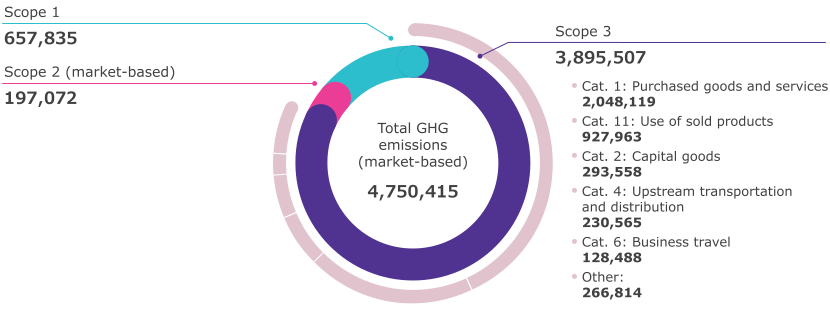
This overview presents our total GHG emissions across all scopes and illustrates the distribution between direct Scope 1 emissions, market-based Scope 2 emissions, and comprehensive Scope 3 emissions.
GHG emissions per business sector
The table below outlines our GHG emissions in fiscal 2025, broken down by business sector:
in t CO2eq |
|
Life Science |
|
Healthcare |
|
Electronics |
|
Corporate and Other |
|---|---|---|---|---|---|---|---|---|
Gross Scope 1 GHG emissions |
|
149,198 |
|
69,158 |
|
418,296 |
|
21,184 |
Gross Scope 2 GHG emissions (location-based) |
|
173,305 |
|
39,393 |
|
156,210 |
|
8,965 |
Gross Scope 2 GHG emissions (market-based) |
|
48,756 |
|
13,224 |
|
120,398 |
|
14,694 |
Gross Scope 3 (indirect) GHG emissions |
|
1,464,614 |
|
535,476 |
|
1,838,579 |
|
56,838 |
We have two plants under the EU ETS at Darmstadt and Gernsheim in Germany. The Ulsan site in South Korea is also under emission trading scheme.
Merck KGaA, Darmstadt, Germany, accounted for the following shares of total GHG emissions: In 2025, its Scope 1 emissions totaled 20,428 tons of CO2eq (2024: 18,413). Its Scope 2 emissions were 3,898 tons of CO2eq (location-based) (2024: 3,416) and 8,481 tons of CO2eq (market-based) (2024: 6,704). As Merck KGaA, Darmstadt, Germany, has no significant business activities, its Scope 3 emissions are negligible.
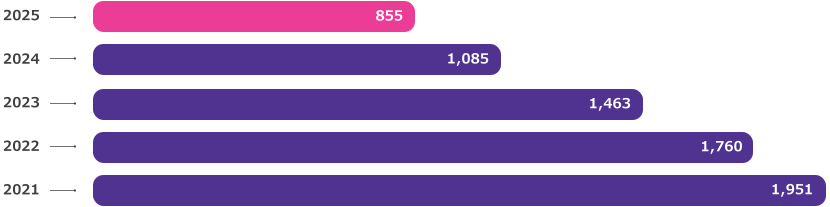
GHG emission reduction trend for scope 1 and scope 2 (market based)
This emissions trajectory demonstrates our systematic GHG reduction progress, showing a continuous decline in our scope 1 and scope 2 (market based) GHG emissions in kilo tons of CO2eq.
GHG intensity per net sales
The following table outlines the GHG intensity per net sales:
in t CO2eq/€ million |
|
2025 |
|
2024 |
|
Change to previous year |
|---|---|---|---|---|---|---|
Total GHG emissions (location-based) per net sales |
|
234 |
|
271 |
|
-13.7% |
Total GHG emissions (market-based) per net sales |
|
225 |
|
263 |
|
-14.5% |
Our total GHG emissions are calculated using both location-based and market-based methods. The calculations are derived from comprehensive emissions inventories that account for all relevant sources of GHG emissions across our operations. The data on net sales were taken from our Consolidated Income Statement, which totaled € 21,102 million in the fiscal 2025 (2024: 21,156). The GHG intensity is calculated by dividing the total GHG emissions (in metric tons of CO2eq) by net sales (in million euros).
Biogenic CO2 emissions
The following table outlines the biogenic CO2eq emissions not included in the gross GHG emission calculations:
Our Scope 1 biogenic CO2 emissions are calculated based on the total direct emissions from an owned biomass heating plant, using data sourced from operational records and emissions inventories. Our Scope 2 biogenic GHG emissions (market-based) reflect the indirect biogenic CO2 emissions from the consumption of heat or steam purchased from a third-party biomass heating plant, calculated using market-based methods. The data were collected from utility bills and energy procurement documents. Our Scope 3.5 biogenic CO2 emissions are derived from the overall Scope 3.5 emissions calculation by categorizing dedicated waste streams as completely or partially biogenic. Our Scope 3.12 biogenic emissions are derived from the overall Scope 3.12 emissions by separating emissions from bio-based packaging materials. It is assumed that the biogenic emissions from the disposal of products are negligible.
Share and types of contractual instruments to procure electricity (%)
The following table details the share and types of contractual instruments we used to procure electricity, showing both bundled and unbundled instruments.
in %1 |
|
2025 |
|
2024 |
||||
|---|---|---|---|---|---|---|---|---|
Share of energy procured via bundled contractual instruments |
|
19.4 |
|
19.2 |
||||
bundled contractual instrument: Retail green electricity |
|
5.1 |
|
5.9 |
||||
bundled contractual instrument: Onsite Power Purchase Agreement (PPA) |
|
– |
|
– |
||||
bundled contractual instrument: Green Energy Certificate (GEC) |
|
4.1 |
|
3.2 |
||||
bundled contractual instrument: Guarantees of Origin (GO) |
|
10.2 |
|
10.1 |
||||
bundled contractual instrument: National Framework for Certification (NFC) |
|
– |
|
– |
||||
Share of energy procured via unbundled contractual instruments |
|
35.2 |
|
26.3 |
||||
unbundled contractual instrument: U.S. Renewable Energy Certificate |
|
4.2 |
|
4.5 |
||||
unbundled contractual instrument: Virtual Power Purchase Agreement (VPPA) |
|
29.1 |
|
19.9 |
||||
unbundled contractual instrument: Guarantees of Origin (GO) |
|
– |
|
– |
||||
unbundled contractual instrument: International Renewable Energy Certificate |
|
1.6 |
|
1.8 |
||||
unbundled contractual instrument: Tradeable Instrument for Global Renewables (TIGR) |
|
0.3 |
|
0.1 |
||||
Total share of procured energy via bundled and unbundled contractual instruments |
|
54.6 |
|
45.5 |
||||
|
||||||||
Bundled contractual instruments include electricity and associated attributes from renewable energy sources. In the case of unbundled contractual instruments, electricity is procured separately from the associated renewable attributes. We collect the data from procurement contracts and energy invoices. Our classification of contractual instruments as bundled or unbundled is based on definitions in relevant regulatory guidelines, such as the GHG Protocol for Scope 2.
Calculation of our Scope 1, 2 and 3 GHG emissions
Our GHG emissions calculation follows GHG Protocol standards across Scope 1, 2, and 3 categories, ensuring comprehensive and transparent climate impact measurement.
Calculation Scope 1
In accordance with the GHG Protocol, we distinguish between the following sources when calculating our Scope 1 emissions: Stationary combustion, mobile combustion, process-related emissions, and diffuse emissions (coolants or other gases released intentionally or unintentionally).
Our energy bills provide the data for our emissions from stationary combustion. We combine their data with the corresponding emission factors obtained from the GHG Protocol. To calculate process-related emissions, we use internal production data combined with corresponding emission factors, sourced from the Sixth Assessment Report of the IPCC. We account for diffuse emissions using data from invoices from the maintenance of our plants, combined with corresponding emission factors sourced from the IPCC’s Sixth Assessment Report. Scope 1 GHG emissions from leased cars are calculated using a fuel-based and contract-/distance-based method. This calculation includes fuels dispensed at our own filling stations. We perform all calculations using our Group-wide EHS data management system.
Calculation Scope 2
In accordance with the GHG Protocol, we distinguish between the sources of purchased or acquired electricity, steam, heat, and cooling when calculating our location-based Scope 2 emissions. We consider steam and heat together. Our energy bills provide the data basis for all four sources, combined with their corresponding emission factors. We obtain the emission factors for purchased electricity from the IEA and the U.S. Emissions & Generation Resource Integrated Database (eGRID). We source the emission factors for steam, heat, and cooling from the UK Department for Environment, Food & Rural Affairs (DEFRA). Scope 2 GHG emissions from leased cars are calculated using a contract-/distance-based approach.
We also calculate market-based Scope 2 emissions in accordance with the GHG Protocol in all four categories. Following the hierarchy of the GHG Protocol for emission factors, we use supplier-specific emission factors reported by our sites, residual mix factors (AIB for Europe, Green-e for the United States) and location-based emission factors. We perform all calculations in our Group-wide EHS data management system.
Calculation Scope 3
We report our Scope 3 emissions according to the 15 categories of the GHG Protocol:
Categories 1 and 2 represent all upstream emissions related to our procurement activities. Category 1 includes emissions from the extraction, production, and transportation of goods and services we purchased or acquired during the reporting year. Category 2 includes all upstream emissions from the extraction, production, and transportation of capital goods we purchased or acquired during the reporting year. Emissions are calculated via a spend-based approach, using a procurement data management system and environmentally extended input-output data (source: US Environmentally-Extended Input-Output (USEEIO) Technical Content, United States Environmental Protection Agency). USEEIO provides emission factors on a spend basis for various industrial sectors and does not consider regional differences. Likewise, emissions from services are calculated via a spend-based approach using the same procurement data management system. This calculation method includes the emissions data of our main suppliers. The remaining gap is related to our subsidiaries that either do not have their own procurement system or have a very specific system.
Category 3 includes emissions related to the production of fuels and energy we purchased and consumed in the reporting year that are not included in Scope 1 or 2. This category also encompasses emissions from our leased car fleet. Data on purchased and consumed fuels, electricity, steam/heat, and cold, which form the basis for calculating category 3 emissions, are collected via our Group-wide EHS data management system. To determine the upstream emissions of purchased fuels, we multiply the fuel quantities by the well-to-tank emission factors (source: DEFRA). We calculate upstream emissions, as well as transportation and distribution losses of purchased heat/steam by multiplying the consumption figures by the respective emission factors (source: DEFRA). To calculate emissions from the generation as well as transport and distribution (T&D) of minor quantities of purchased cold, we use the same emission factors as for heat/steam, as no specific factors are available. We calculate upstream emissions from purchased electricity by multiplying the consumption figures by the respective emission factors (source: DEFRA). Here, electricity purchased from renewable sources (direct supply of renewable electricity and electricity covered by energy attribute certificates) is deducted. We determine electricity T&D losses based on the quantities of electricity purchased and country-specific loss factors (source: IEA). In this process, the electricity sourced from renewable sources (direct supply of renewable electricity) is deducted.
Category 4 includes the emissions from the transportation and distribution of products we purchased during the reporting year. This refers to transportation and distribution between our tier 1 suppliers and our own operations, where the vehicles and facilities are not owned or controlled by us. Additionally, category 4 includes the transportation and distribution of services purchased by us. This includes both inbound logistics and outbound logistics, as well as transportation and distribution between our own facilities in vehicles and facilities not owned or controlled by us. We use a mixed approach to calculate these emissions. Logistics service providers supply their own primary data, and if they are not available, GHG emissions are calculated by a third-party provider using an energy-based bottom-up approach. For the Life Science business sector, shipment data from forwarders provide the main data source, while in the Electronics business sector, delivery notes from our ERP systems form the basis for calculation. Our Healthcare business sector uses forwarder data and data from various ERP systems. We consolidate these data in internal systems, along with primary data from suppliers and logistics service providers. The respective shipment data are sent to the third-party provider and processed there. For our Life Science business sector, as no data on road transportation for the LATAM and Asia regions are available, we use a spend-based approach to estimate emissions. If data for the full year are not yet available, we make extrapolations based on previous years’ data. We do not consider deliveries from tier 1 suppliers that are not directly paid by us but are delivered to us, due to a lack of available data.
Category 5 includes emissions from the disposal and treatment of waste generated in facilities we own or control, as well as the third-party disposal of wastewater. The calculation of emissions from waste generated in our operations and disposed of by third parties is based on primary data from our manufacturing sites, collected in our Group-wide EHS data management system. These data are divided into various waste types, such as solvent waste and soil waste, and distinguished by waste disposal methods, such as waste-to-energy, incineration, landfill or recycling. For the emission factors based on the waste’s carbon content, we use the “Guidance for Accounting & Reporting Corporate GHG Emissions in the Chemical Sector Value Chain”. It states that recycling and energy recovery are attributed to the organization that uses the recycled material or uses the waste to generate energy. As a result, the emissions from these activities are not included in our GHG inventory. The carbon content factors are primarily taken from the “2006 IPCC Guidelines for National Greenhouse Gas Inventories”, and these data are then multiplied together. Emissions from the transportation of waste materials are not considered. To calculate GHG emissions from wastewater treatment in third-party municipal or industrial wastewater treatment plants, we use primary data from our manufacturing sites, collected annually via our Group-wide EHS data management system. Wastewater quantities are multiplied by the DEFRA emission factor for water treatment.
Category 6 includes emissions from the transportation of employees for business-related activities in vehicles owned or operated by third parties, such as aircraft, trains, buses, and passenger cars. Air travel emissions are calculated based on our flight booking and billing processes. Our payment solution service provider supplies detailed data of all flights booked and uses them to calculate the associated GHG emissions. Rail travel is considered relevant in some European countries, including Germany, France and Spain, while it is considered negligible in non-European countries. Currently, data for rail travel is only available in Germany and provided by Deutsche Bahn AG. Emissions data for rental cars are provided annually by our global rental car providers. Data on other forms of transportation, such as trams, taxis and buses, are not available. Their impact on our overall emissions is expected to be negligible. Emissions from hotel accommodation are calculated based on the number of hotel stays per country, using our internal ERP system and the DEFRA emission factors for hotel stays.
Category 7 includes emissions from the transportation of employees between their homes and work. We conduct a global Employee Engagement Survey each year, which includes commuting habits every two to three years, and extrapolate the results to the global employee population. We use an assumption of 220 working days per year, derived from the “Guidance for Accounting & Reporting Corporate GHG Emissions in the Chemical Sector Value Chain”. Emission factors for modes of transport are taken from DEFRA, business travel, and include electric vehicles and working from home.
Category 8 includes emissions from the operation of assets that are leased and not already included in our Scope 1 or 2 reporting. Emissions from this category are not relevant to our Scope 3 reporting as leased assets, such as rented offices, labs or warehouses, are part of our Scope 1 and 2 GHG inventory.
Category 9 includes the transportation and distribution of products that we sold to end consumers during the reporting year, if not paid for by us. It also includes retail and storage in vehicles and facilities we do not own or control. Like in category 4, these emissions are calculated by a third-party provider using an energy-based bottom-up approach, which can provide emissions data for our Healthcare and Electronics business sectors. The data from the Life Science business sector are negligible. To ensure the effectiveness of logistic processes, the transport of Life Science products is organized and contracted by us and is therefore covered under category 4.
Category 10 includes emissions from the processing of sold intermediate products by third parties after sale. We produce a wide variety of intermediate products for various purposes. Due to the range of potential applications and our customer structure, the related GHG emissions cannot be tracked in a practical manner, as confirmed by the “Guidance for Accounting and Reporting Corporate GHG Emissions in the Chemical Sector Value Chain” from the World Business Council for Sustainable Development.
Category 11 includes emissions from the use of goods and services we sold during the reporting year. Internal expert assessments of our diverse product portfolio show that products that contain or emit GHG emissions during their use are the main driver of GHG emissions in this category. Products that directly consume energy (electricity) during use contribute to a much lesser extent. Fuels, feedstocks and indirect use-phase emissions are not relevant for us. Indirect use-phase emissions are optional and not reported by us. Our Electronics product portfolio contains some specialty gases with high GWP that are emitted during the use phase. Emissions are calculated based on the technical expertise of internal experts, using the percentage of gas quantities that escape the processes at our customers, abatement efficiency, sales volumes, and global warming potentials (source: IPCC, 6th Assessment Report). Some product control devices also consume electricity, and their emissions are calculated based on runtime, average lifetime and an estimated global emission factor. Other product lines are negligible or do not contribute to the overall emissions within this category. Our Life Science business sector offers two product lines that consume electricity during their use phase. The calculation of these emissions is based on internal expert estimations of the products’ energy consumption, sales volumes and respective emission factors per country (source: IEA). Sales data cover approximately 90–95% of total sales. Our Healthcare business sector offers some battery-based injection devices that fall under category 11. Their emissions are calculated based on energy consumption, sales volumes and the respective emission factors per country (source: IEA).
Category 12 includes emissions from the waste disposal and treatment of products we sold during the reporting year at the end of their life. Emissions from the disposal of sold products and respective packaging materials are calculated based on sales data, the weight data of products and packaging material, average weighted emission factors based on statistical data on regional disposal methods, and DEFRA emission factors (source: DEFRA).
Category 13 includes emissions from the operation of assets owned (acting as lessor) and leased to other entities. In Darmstadt, Germany, we are the lessor of a number of residential and commercial buildings. Emissions are calculated based on building master data, such as energy demand from energy certificates and respective emission factors. To split the energy demand into heating and electricity for residential and commercial buildings, we use data from the IEA. Emissions from heating energy are calculated using the fuel type and DEFRA emission factors. Emissions from electricity demand are calculated using the German grid emission factor provided by Bundesverband der Energie- und Wasserwirtschaft e.V. (BDEW).
Category 14 includes emissions from the operation of franchises. As we do not operate franchises, this category is not relevant for us.
Category 15 includes emissions from the operation of investments. This includes equity and debt investments and project finance during the reporting year that are not included in Scope 1 or 2. Emissions are calculated based on the direct share of capital, the respective annual revenue and environmentally extended input-output (EEIO) data (source: US Environmentally Extended Input-Output (USEEIO) Technical Content, United States Environmental Protection Agency). USEEIO provides emission factors on a spend basis for various industrial sectors and does not consider regional differences.
Removal of GHGs from the atmosphere and CO2eq certificates (E1-7)
In our own business activities, we do not conduct any activities to remove or reduce GHGs that we finance via CO2eq certificates.
Our internal CO2 pricing (E1-8)
While GHG emissions are generally considered in our R&D and product development processes, a dedicated carbon pricing scheme is applicable for major investment projects. In the respective CapEx projects, we use a shadow price of € 100 per ton of CO2eq, which is applied globally. This shadow price was informed by the guidance of the EU-ETS on carbon price monitoring and was also determined through a peer review analysis. It ensures the integration of GHG emission criteria early in the project development stage. It is used for CapEx projects over € 10 million, as well as those over € 2 million with a high sustainability impact. The EU-ETS is seen as the standard for carbon pricing, providing a clear regulatory framework that aligns with climate goals. Its comprehensive approach makes it a suitable global reference scheme.
As this carbon pricing scheme is geared toward avoiding or reducing GHG emissions in the future, it is not applicable to actual emissions in the current year. For the same reason, carbon pricing considerations do not impact the value of existing assets in the Financial Statements.